
Hormonal VS Non-Hormonal Birth Control: How Do You Decide?
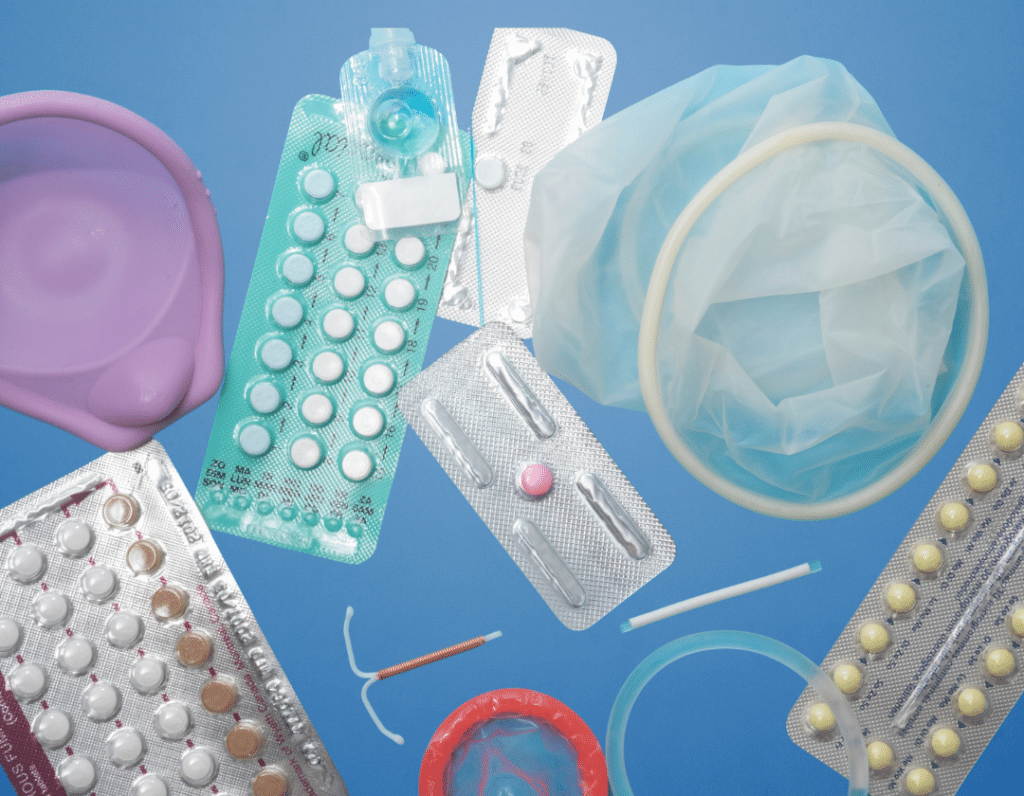
In a world of TikTok doctors and Instagram nurses, it can be hard to figure out if the information you are receiving is true, especially about sexual health. Today we are going to take a quick look at hormonal vs non-hormonal birth control methods to finally answer the question: how do I know which birth control method to choose?
Before we dive into content, I want to state that no matter the birth control method you choose, all of the methods we discuss have been rigorously researched, tested, and reviewed for safety, regardless of whether they are hormonal or non-hormonal.
How do Hormonal Birth Control Methods Work?
There are two main ways that hormonal birth control methods work: thickening the cervical mucus and/or preventing your body from ovulating.
Let’s take a look at our first method: Birth control pills. Birth control pills come in two types: Combination and progestin-only (sometimes referred to as mini pills!).
Combination Pill 
This method contains both estradiol and progestin, synthetic hormones that replicate the ones naturally produced in your body: estrogen and progesterone. These hormones work together to regulate bleeding (estradiol) and stop your body from ovulating (progestin), which prevents pregnancy. Read about side effects, efficacy, and how to get this method on the Combination Pill landing page.
Progestin Only Pill
This method contains progestin only. This hormone works primarily by thickening your cervical mucus, blocking the sperm, and preventing pregnancy. Read about side effects, efficacy, and how to get this method on our Progestin Only Pills landing page.
The Patch 
Okay, now that we’ve covered pills, let’s move on to the next method: The Patch! The name is exactly what it sounds: a small band-aid-like square placed on the body and worn for 3 weeks, then removed the 4th week for your period. Just like combined pills, this method contains both estradiol and progestin. These hormones work together to regulate bleeding and prevent ovulation, which prevents pregnancy. Read about side effects, efficacy, and how to get this method on the Patch landing page.
The Ring 
Our next method up to bat is: The Ring! This is a small, body-safe plastic ring the size of a hair tie. It is inserted into the back of the vagina and worn like a diva cup/menstrual disc. Like the patch, it is worn for 3 weeks and then removed in the 4th week for your period. There are two types of rings. One is discarded after 3 weeks of use, or an annual ring that is rinsed off between cycles. This method contains both estradiol and progestin. These hormones work together to regulate bleeding and stop your body from ovulating, which prevents pregnancy. Read about side effects, efficacy, and how to get this method on the Ring landing page.
The Depo-Provera Shot 
Halfway there, this method is known as the Depo-Provera Shot. Just like it sounds, Depo-Provera is a contraceptive shot administered by yourself or a healthcare professional into the body every three months. This method contains progestin only. This hormone thickens your cervical mucus, blocking sperm and preventing pregnancy. Read about side effects, efficacy, and how to get this method on our Shot landing page.
The Implant 
Our second-to-last method is the Implant. This is a match-sized, body-safe plastic rod inserted into the upper arm by a skilled provider. This method lasts up to 5 years but can be removed sooner. This method contains progestin only. This hormone thickens your cervical mucus, blocking sperm and preventing pregnancy. Read about side effects, efficacy, and how to get this method on our Implant landing page.
Hormonal IUDs
Last but not least: The Hormonal IUD (intrauterine device). An IUD is a tiny T-shaped, body-safe plastic device inserted through the cervix and placed at the top of the uterus; it is about the size of a quarter or paperclip. The hormonal IUD can last between 3-8 years, depending on the brand. This method contains progestin only. This hormone thickens your cervical mucus, blocking sperm and preventing pregnancy. Read about side effects, efficacy, and how to get this method on our Hormonal IUD landing page.
How do Non-Hormonal Birth Control Methods Work?
Non-hormonal birth control methods work by preventing sperm from swimming to an egg.
Condoms 
Let’s take a look at our first method, the only birth control method that protects against the spread of STI’s and HIV: Condoms. There are two types of condoms: external and internal. External condoms are placed on the penis and are often made of latex. Internal condoms are made of nitrile and are placed inside the vagina or anus before sex. This method works by preventing the sperm from entering the body, preventing pregnancy. Read about side effects, efficacy, and how to get this method on our Condoms landing page.
Copper IUDs
This method should sound familiar: The Copper IUD. An IUD is a tiny T-shaped, body-safe copper device inserted through the cervix and placed at the top of the uterus. It is not much larger than a quarter and/or a paperclip. The hormonal IUD can last up to 12 years but can be removed sooner. This works by releasing copper into the body, which acts as a natural spermicide aka the sperm die. Read about side effects, efficacy, and how to get this method on our Copper IUD landing page.
Vaginal Gel 
The next method we are discussing is: Vaginal Gel. Phexxi, the only brand currently available, works by altering the PH level of the vagina, essentially making it “unsafe” for sperm. It is inserted into the vagina one hour before sex and must be used each time. Read about side effects, efficacy, and how to get this method on our Vaginal Gel landing page.
The Diaphragm or Cervical Cap 
These two methods look different but are used similarly. The diaphragm and/or cervical cap is a reusable, body-safe silicone cup that is inserted into the vagina to cover the cervix during sex. When inserted correctly, neither partner should be able to feel it. For maximum effectiveness, this method has to be used with spermicide. Read about side effects, efficacy, and how to get this method on our Diaphragm or Cervical Cap landing page.
Fertility Awareness 
Our second-to-last non-hormonal method: Fertility awareness-based method, or sometimes referred to as natural family planning. This method works by tracking daily symptoms to identify ovulation, thus great for someone trying to get pregnant. There are three ways to track these symptoms: body temperature, cervical mucus, and period cycles, all commonly tracked via an app or calendar. For best results, it is recommended to use all three tracking approaches together. Read about the menstrual cycle, efficacy, and how to start this method on our Fertility Awareness landing page.
Withdrawal 
Finally, we have withdrawal, sometimes commonly referred to as “the pull-out method.” As simple as it sounds, this method works by pulling the penis out of the vagina before ejaculation. Read about efficacy on our Withdrawal landing page.
So You Have the Context, But Now What?
The most common question I get when I tell people I work at ICAN! is “What method is the best one/how do I choose one?” and I simply say the best method is the method YOU want to use! I know that sounds silly, but it is true. Choosing a birth control method is totally up to you. There is no wrong answer.
Still feeling unsure? We can help! Click the image below to take our short quiz on birth control methods.

Reviewed by Kai Tao, ND, MPH, CNM (She/her), August 2026