Emergency Contraception vs. the Abortion Pill: Explained

I’m gonna hold your hand when I say this: your ‘For You’ Page is full of misinformation. That’s not an attack…mine is too! As a chronically online girly who happens to work in sexual health, I can confirm that, oftentimes, the internet actually wants us to be confused. Why? Well, confusion is profitable. Whether it’s to sell us on a product, push an agenda, or just keep us doom-scrolling, muddying the waters is good for business. Unfortunately, when it comes to emergency contraception and the abortion pill, these confusion tactics are especially prevalent – and especially consequential.
So, let me set the record straight once and for all (okay, maybe not once and for all…it bears repeating): emergency contraception and the abortion pill are not the same thing. But the way the internet talks about them, you’d never know it – so if you’re fuzzy on the difference, don’t feel embarrassed! You’re not the only one. Let’s break it down.
Emergency Contraception
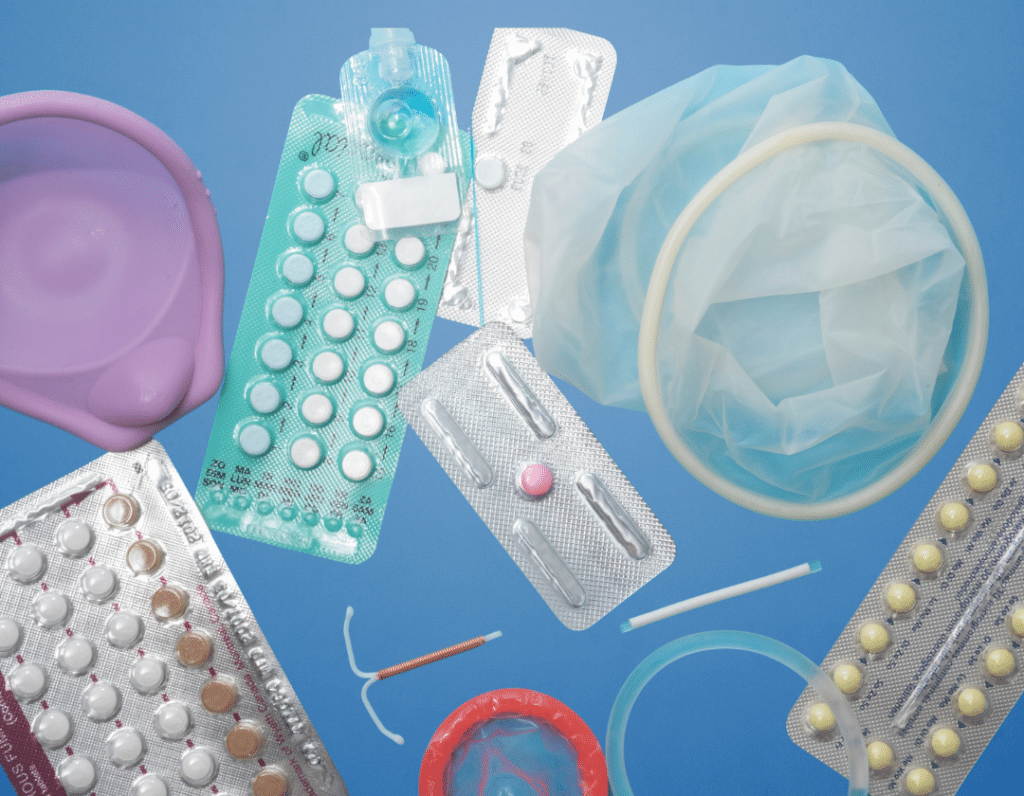
What is it? Emergency contraception, commonly referred to as “Plan B” or “the morning after pill,” is an oral medication or intrauterine device (IUD) that stops a pregnancy before it starts.
How does it work? Emergency contraception pills delay the ovaries from releasing an egg (AKA ovulating) until sperm are no longer active, whereas IUDs prevent the egg and sperm from joining. Both methods are designed to prevent fertilization.
Emergency contraception is exceptionally safe and side effects like cramping and bleeding tend to be minimal. Emergency contraception will not harm an existing pregnancy and can be used multiple times without affecting your ability to get pregnant in the future.
When can it be taken? People with female anatomy can take the emergency contraception pill within 120 hours (5 days) after unprotected sex/condom failure. The sooner it’s taken, the more effective it is, and it’s recommended that it’s taken within 72 hours (3 days). Same rule of thumb with an IUD, it must be inserted within that 5 day window.
*Be sure to read the instructions on/inside the box before taking emergency contraception pills.
Types of emergency contraception…
There are two main types of emergency contraception pills: levonorgestrel (Plan B, Aftera, Julie, My Way, Take Action, and other generic brands) and ulipristal acetate (Ella). Heads up: levonorgestrel has a suggested weight limit of 155 pounds. Don’t be discouraged! It may still work on someone over 155 pounds, but for a higher efficacy rate, ulipristal acetate (Ella) is a better bet. Ella requires a prescription, so you’ll want to speak to a health care provider as soon as unprotected sex/condom failure occurs.
There are also two main types of IUDs that can be used as effective forms of emergency contraception. Both the hormonal IUD and copper IUD are safe to use up to 120 hours (5 days) after unprotected sex/condom failure. IUDs are a good option if you are interested in a longer term method of birth control in addition to the short term need for emergency contraception.
Where can I get it and how much does it cost?
First thing’s first: in the state of Illinois, anyone, regardless of age or gender, can purchase emergency contraception pills over the counter without presenting ID. Occasionally, we hear about a pharmacist claiming that they can refuse sale – this is not true!
Emergency contraception is available for $35-$50 at most pharmacies, campus health centers, and even online marketplaces like Amazon. For an IUD insertion, visit your local health center or primary care doctor. Either way, a more affordable option may be available if you’re eligible for the HFS Family Planning Program – and you can take this easy quiz to find out! Friendly reminder if you have Medicaid coverage, all methods of birth control (including emergency contraception pills and the IUD) are covered without out-of-pocket costs!
Midwest Access Coalition also has a vending machine in Chicago providing free emergency contraception, subject to availability.
To learn more about emergency contraception, check out our birth control series!
Abortion Pill
What is it? Medication abortion, commonly referred to as “Plan C” or “the abortion pill,” is a two-pill regimen used to safely terminate pregnancies up to 70 days (10 weeks) into gestation.
How does it work? The abortion pill comes in two parts: mifepristone and misoprostol. Mifepristone stops the pregnancy from growing by blocking progesterone in the uterus, weakening the uterine lining and causing the embryo to detach. Misoprostol causes the uterus to contract and empty. The abortion pill can be taken in the comfort of a person’s own home. A person who takes the abortion pill can expect some cramping and bleeding. Decades of evidence have shown that the abortion pill is very safe and effective (up to 98%). According to the Guttmacher Institute, in 2023, the abortion pill accounted for approximately 63% of all abortions in the US!
When can it be taken? The abortion pill can be taken up to 70 days (10 weeks) into gestation. Mifepristone comes first, then, 6-48 hours later, misoprostol. In some cases, mifepristone alone can work, but it is always worth consulting your health care provider before deciding not to take misoprostol.
Where can I get it and how much does it cost? Anyone, including minors, can get an abortion in the state of Illinois. The abortion pill can be prescribed by a health care provider from an in-person or online clinic and is also available for mail order. If you have a positive pregnancy test and are looking for a no-cost option please visit this website to learn about the Moms & Babies program.
*To learn more about where to get the abortion pill, please check out Chicago Abortion Fund. They can connect you to providers across the state.
The Bottom Line
TL;DR: emergency contraception stops a pregnancy before it starts, while the abortion pill ends an existing pregnancy. Both are tried and true, safe, and readily available in Illinois. Don’t worry, there’s no pop quiz…but now that you know the difference, it’s worth talking to your peers about it! These days, most young people turn to the internet with their questions about sexual health – and if you’ve seen the misinformation, they probably have too. Lead with the facts, ditch the stigma, and point to specific resources whenever you can.
Whether it’s you or someone else who might need emergency contraception or the abortion pill, remember: the choice is yours, and we’re here to help.